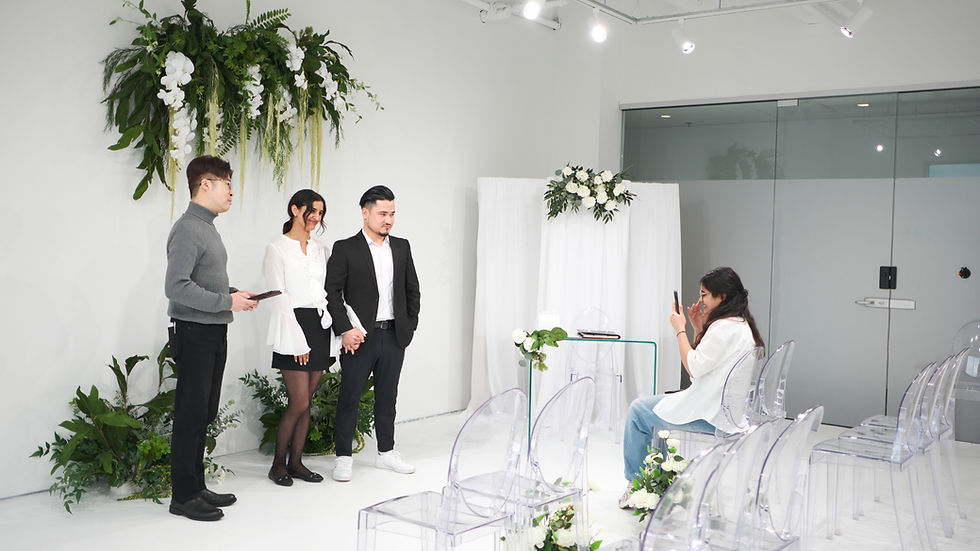
What If We Don't Have Witnesses For Our Marriage Ceremony In British Columbia? | The Ensora Guide
Updated: Jul 8
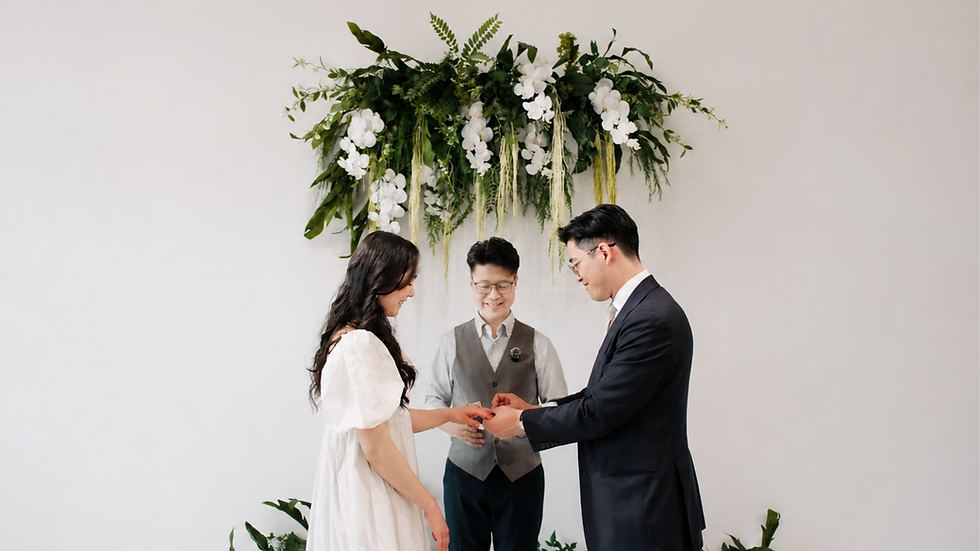
One of the questions we hear more often than people might expect is:
"What if we don't have witnesses?"
At first glance, this seems like a straightforward legal question. In British Columbia, a legal marriage ceremony requires two witnesses.
Yet after helping couples through many legal signing ceremonies and intimate marriages, we have found that the question is rarely just about witnesses.
More often, it is a question about circumstances.
Sometimes it is about privacy. Sometimes it is about logistics. Sometimes it is about family dynamics. Sometimes it is simply because two people have decided they are ready to be married, but have not yet figured out who else should be involved.
The witness requirement may be the visible problem. The situation behind it is often something entirely different.
Why Couples Ask About Witnesses
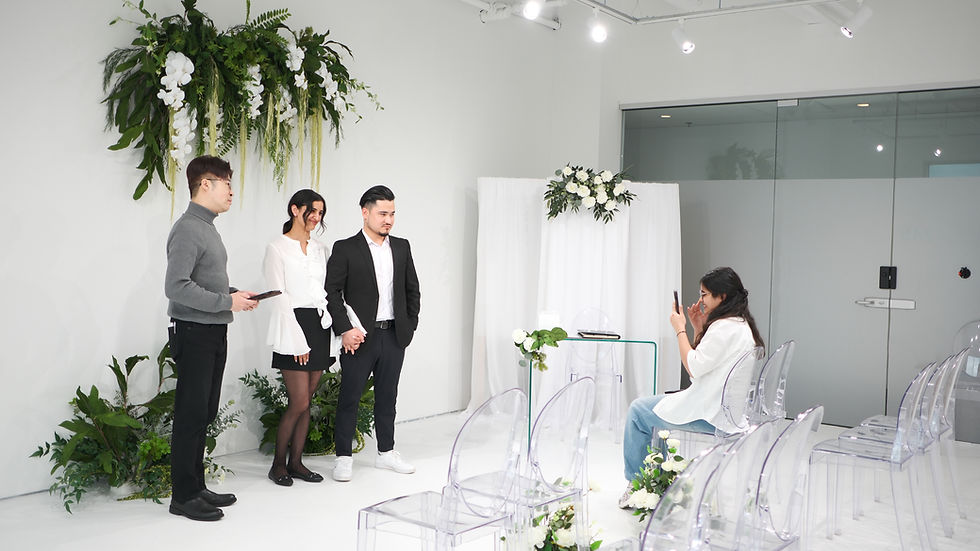
Over the years, we have noticed that couples who ask about witnesses often find themselves in one of a few situations.
Some are travelling to British Columbia specifically to get married and arrive with only the two of them. Some have recently moved to the province and have not yet built a local support network. Others have family members living overseas, making it difficult to involve the people they would naturally choose.
If you are still trying to understand the legal process itself, you may find Getting Married in British Columbia: A Step-by-Step Guide helpful before continuing.
We have also worked with couples who wanted to keep their marriage private for the time being. In these situations, the challenge is not necessarily finding two people. It is deciding whether they want to involve anyone else at all.
Common situations we see include:
Couples travelling to British Columbia to get married
Couples who recently relocated to the province
Couples whose family members live overseas
Couples planning a private marriage before sharing the news publicly
Couples who prefer not to involve friends or family in the legal process
Although the question sounds the same each time, the reason behind it is often very different.
Do Witnesses Need To Be Friends Or Family Members?
No.
This is one of the most common misconceptions we encounter.
In British Columbia, witnesses do not need to be related to you, and they do not need to know you personally. Their role is not to confirm your relationship history or validate your marriage. Their role is simply to witness the legal portions of the ceremony and sign the marriage documents.
Many couples initially assume that witnesses must be people who hold special significance in their lives. While that is often true in traditional weddings, it is not a legal requirement.
Understanding this distinction often opens up possibilities that couples had not previously considered.
Who Can Be A Witness?
Many couples bring their own witnesses.
These may include:
Friends
Family members
Colleagues
Neighbours
In some situations, people already attending the ceremony may also be willing to serve as witnesses. Depending on the circumstances, this could include photographers, videographers, planners, makeup artists, or other vendors who are present on the day.
What matters is not whether they know you personally.
What matters is that they are present, witness the legal portions of the ceremony, and are able to sign the marriage documents.
For many couples, this is the moment the problem starts to feel much simpler.
What Couples Are Often Trying To Solve
When couples ask about witnesses, they are not always looking for information.
Often, they are trying to solve a different problem.
They may be trying to avoid:
Explaining the timing of their marriage
Choosing between family members
Involving people before they are ready
Asking someone for a favour
Creating additional coordination for a simple legal ceremony
This is one of the differences between answering a question and understanding the need behind the question.
A first-time couple may see the witness requirement as another item on a checklist. An experienced officiant often sees the situation surrounding that checklist item.
The question is not always:
"Who can sign?"
Sometimes the question is:
"How do we move forward without creating more complexity?"
For many couples, this question is closely connected to deciding what kind of ceremony they actually want. Some discover that they are not looking for a traditional wedding at all, but something smaller, quieter, and more focused on the marriage itself. If you are still exploring your options, Micro Wedding vs Traditional Wedding | The Ensora Guide may help clarify the differences.
If We Do Not Have Witnesses, What Are Our Options?
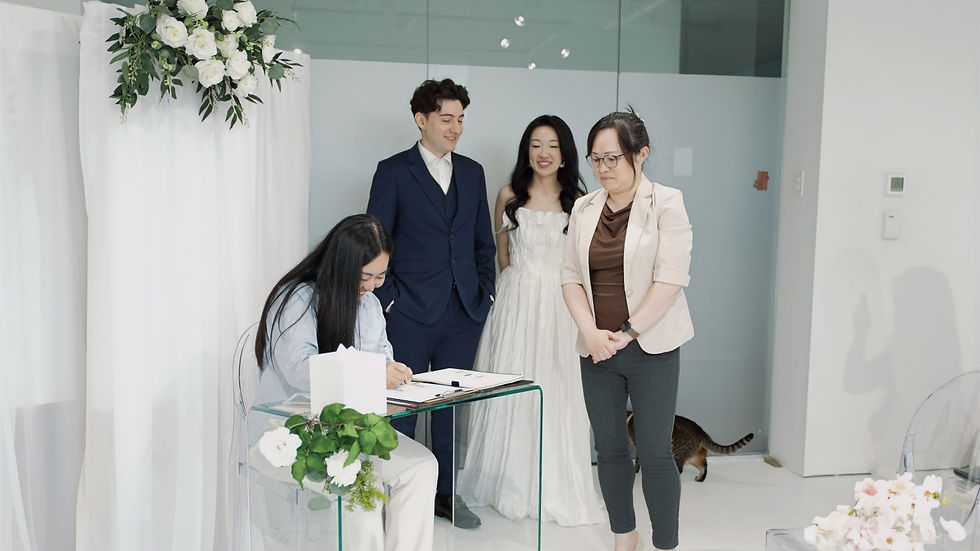
If you do not have witnesses available, there are still several ways to satisfy the legal requirements for marriage in British Columbia.
Some couples arrange their own witnesses in advance. Others discover that people already attending the ceremony are willing to sign. Once couples understand that witnesses do not need to be friends or family members, many realise they already have suitable options available.
For couples who prefer not to involve friends, family members, or other attendees, witness arrangements can also be added as part of an Ensora ceremony booking.
This option was not created because every couple needs it.
It was created because we repeatedly encountered couples whose circumstances made arranging witnesses more complicated than the legal requirement itself.
Over time, we learned that helping those couples was not really about providing witnesses. It was about understanding the situation that led them to ask the question in the first place.
If you are curious about the thinking behind these types of decisions, About The Ensora offers a deeper look at how we approach marriage-first ceremonies and guided simplicity.
A Marriage Does Not Need A Crowd
Many people imagine a marriage ceremony as something that naturally includes family, friends, and a room full of witnesses.
Sometimes it does.
Sometimes it does not.
In British Columbia, a legal marriage requires two witnesses. It does not require a guest list. It does not require an audience. It does not require you to explain your decision to everyone before you are ready.
Some couples arrive with family and friends.
Others arrive with only each other.
Both are valid.
At The Ensora, our role is not simply to answer legal questions. It is to help couples navigate the situations behind those questions, and to create a clear path forward when the answer is not immediately obvious.
That is part of Guided Minimalism: understanding complexity deeply, then helping couples move through it with clarity.
Frequently Asked Questions
Do We Need Witnesses To Get Married In British Columbia?
Yes. British Columbia requires two witnesses to be present during a legal marriage ceremony and to sign the marriage documents.
Do Witnesses Need To Be Friends Or Family Members?
No. Witnesses do not need to be related to you or know you personally.
Who Can Be A Witness?
Witnesses may include friends, family members, colleagues, neighbours, or other people present during the ceremony who are willing and eligible to sign.
What If We Do Not Have Witnesses?
Some couples arrange their own witnesses, while others may ask people already attending the ceremony. Witness arrangements may also be available through certain ceremony arrangements, depending on the circumstances.
Explore the Complete Marriage Guide
If you are planning a legal signing or intimate marriage ceremony and still have questions about licences, witnesses, paperwork, timelines, or ceremony options, visit our Frequently Asked Questions page for additional guidance.